


Introduction
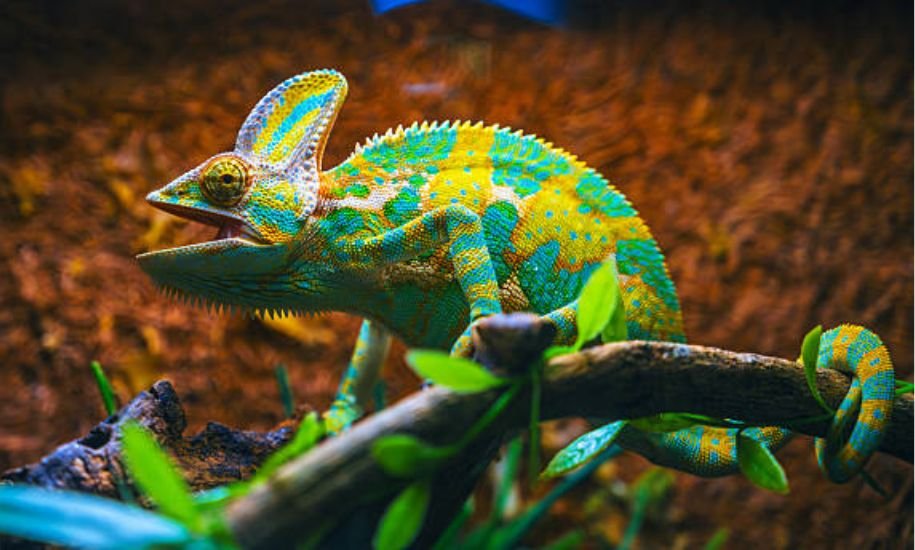
The term Chameleónovité refers to the reptile family Chamaeleonidae, which includes the fascinating group of lizards known as chameleons. These animals are famous worldwide for their remarkable ability to change colour, their independently moving eyes, and their lightning-fast tongues used for catching prey. Chameleons are among the most specialised reptiles on Earth, with unique physical adaptations that allow them to thrive in a variety of environments.
Chameleónovité species are primarily found in Africa and Madagascar, although a few species live in southern Europe, the Middle East, and parts of Asia. Over 200 species have been identified, ranging from tiny leaf-litter dwellers to larger tree-living reptiles. Their unusual appearance, behaviour, and hunting techniques make them one of the most studied and admired groups of reptiles in the animal kingdom.
Quick Facts About Chameleónovité
| Feature | Information |
|---|---|
| Scientific Family | Chamaeleonidae |
| Common Name | Chameleons |
| Animal Type | Reptile |
| Number of Species | 200+ species |
| Primary Habitat | Forests, savannas, shrublands, deserts |
| Main Diet | Insects and small animals |
| Famous Ability | Colour changing skin |
| Geographic Range | Africa, Madagascar, southern Europe, Middle East, Asia |
Understanding the Family Chameleónovité
Chameleónovité belong to the reptile order Squamata, the same group that includes snakes and most lizards. What makes them distinct from other reptiles is the set of specialised evolutionary adaptations that help them survive in arboreal environments.
Most chameleons live in trees and bushes, where they rely on camouflage and stealth rather than speed to hunt and avoid predators. Their bodies are perfectly designed for climbing branches and blending into foliage. Because of this, they have become symbols of adaptation and environmental awareness in the natural world.
The family Chameleónovité includes several genera such as Chamaeleo, Furcifer, Trioceros, Calumma, and Brookesia. Some of these species are large and colourful, while others are extremely small and difficult to spot in the wild.
You May Also Read | At The CharFen Animals Section
Physical Characteristics of Chameleónovité
Colour-Changing Skin
Perhaps the most well-known characteristic of chameleons is their ability to change colour. Contrary to popular belief, colour changes are not used only for camouflage. Chameleons alter their skin colour for several reasons, including:
- Communication with other chameleons
- Regulating body temperature
- Displaying dominance or submission
- Expressing stress or excitement
Their skin contains specialised cells called chromatophores that expand or contract to create different colours and patterns.
Independently Moving Eyes
Chameleons possess one of the most unique visual systems in the animal kingdom. Each eye can rotate independently, allowing them to observe two different directions at the same time.
This ability provides a nearly 360-degree field of vision, which helps them detect both prey and predators without moving their bodies. When they spot prey, both eyes focus forward to calculate the exact distance before striking.
Long Projectile Tongue
The hunting mechanism of Chameleónovité is one of the fastest biological movements known. A chameleon’s tongue can extend up to twice the length of its body and capture prey in a fraction of a second.
The tongue is sticky and muscular, allowing it to grip insects instantly before retracting back into the mouth.
Specialised Feet and Tail
Chameleons have zygodactylous feet, meaning their toes are grouped into two opposing clusters that act like pincers. This structure allows them to firmly grasp branches while climbing.
Many species also have a prehensile tail, which functions like a fifth limb. The tail helps them balance and stabilise themselves while moving through trees.
Habitat and Distribution
Most species of Chameleónovité live in Africa, with Madagascar alone hosting nearly half of the world’s known species. These reptiles have adapted to a wide range of environments, including:
- Tropical rainforests
- Dry savannas
- Mountain forests
- Coastal shrublands
- Semi-desert regions
The Mediterranean chameleon is one of the few species found in Europe, particularly in Spain and Portugal.
Chameleons prefer habitats with plenty of vegetation, as plants and trees provide both camouflage and hunting opportunities.
Types of Chameleónovité
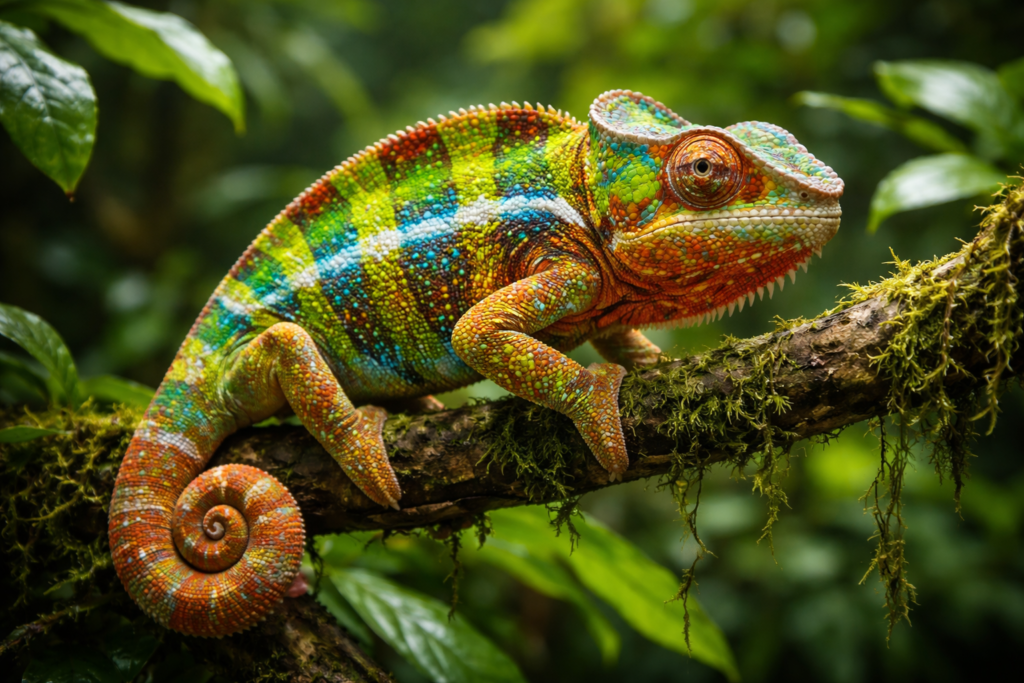
Scientists classify chameleons into several groups, but two major subfamilies are commonly recognised.
Typical Chameleons (Chamaeleoninae)
These are the larger and more well-known species that usually live in trees and bushes. They often display vibrant colours and distinctive crests or horns.
Examples include:
- Veiled chameleon
- Panther chameleon
- Jackson’s chameleon
These species are also commonly kept in reptile terrariums by enthusiasts.
Pygmy Chameleons (Brookesiinae)
Pygmy chameleons are much smaller and often live on the forest floor among leaves and twigs. Some species are only a few centimetres long, making them among the smallest reptiles on Earth.
Unlike many larger chameleons, they rely less on bright colours and more on natural camouflage.
Diet and Feeding Behaviour
Chameleónovité are mainly insectivores, meaning their diet consists primarily of insects. Their typical prey includes:
- Crickets
- Grasshoppers
- Beetles
- Flies
- Moths
Larger chameleon species may occasionally eat small vertebrates such as:
- Tiny birds
- Small lizards
- Baby rodents
Chameleons are ambush predators. Instead of chasing prey, they remain still and wait patiently for insects to come within range before launching their tongue.
Behaviour and Lifestyle
Chameleons are generally solitary animals. They prefer living alone and may become aggressive toward other chameleons if forced to share territory.
Their movement is slow and deliberate. When walking along branches, they sway slightly from side to side, mimicking the motion of leaves in the wind. This behaviour helps them remain hidden from predators.
Communication between chameleons is mainly visual. They display colours, inflate their bodies, or change posture to show dominance or attract mates.
Reproduction and Life Cycle
Chameleons reproduce through mating, after which females either lay eggs or give birth to live young depending on the species.
Egg-laying species deposit their eggs in soil or sand and leave them to incubate for several months. Some species may lay 20 to 80 eggs at a time.
Live-bearing chameleons, such as Jackson’s chameleon, give birth to fully formed babies that can immediately climb and hunt small insects.
Young chameleons grow quickly but face many predators, including birds, snakes, and mammals.
Conservation and Threats
Many species of Chameleónovité are threatened due to habitat loss, deforestation, and illegal wildlife trade. Madagascar, which hosts the highest diversity of chameleons, has experienced significant environmental destruction in recent decades.
Conservation organisations are working to protect chameleon habitats and regulate the reptile pet trade. Protecting forests and biodiversity is essential for the survival of many rare species.
Fascinating Facts About Chameleónovité
Chameleons are full of surprising biological features. Some of the most interesting facts include:
- Their tongue acceleration can exceed 500 times the force of gravity.
- Some species can see ultraviolet light, improving their hunting ability.
- The smallest chameleon species is less than 3 centimetres long.
- Madagascar is home to the largest diversity of chameleons in the world.
- Chameleons rarely drink standing water and instead lick dew or rain from leaves.
Conclusion
Chameleónovité are one of the most extraordinary reptile families on Earth. Their unique ability to change colour, independently moving eyes, specialised climbing feet, and high-speed tongue make them perfectly adapted predators in their environments.
From the dense rainforests of Madagascar to the dry savannas of Africa, these reptiles demonstrate the incredible diversity of nature and the power of evolutionary adaptation. Despite their remarkable abilities, many chameleon species face threats from habitat destruction and wildlife trade, making conservation efforts increasingly important.
Understanding and appreciating animals like Chameleónovité helps highlight the importance of protecting biodiversity around the planet. Articles exploring fascinating wildlife topics like this can also be found on the UK blog “The CharFen”, where readers can discover more educational content about animals, nature, and the natural world.
You May Also Read | At The CharFen Animals Section
