


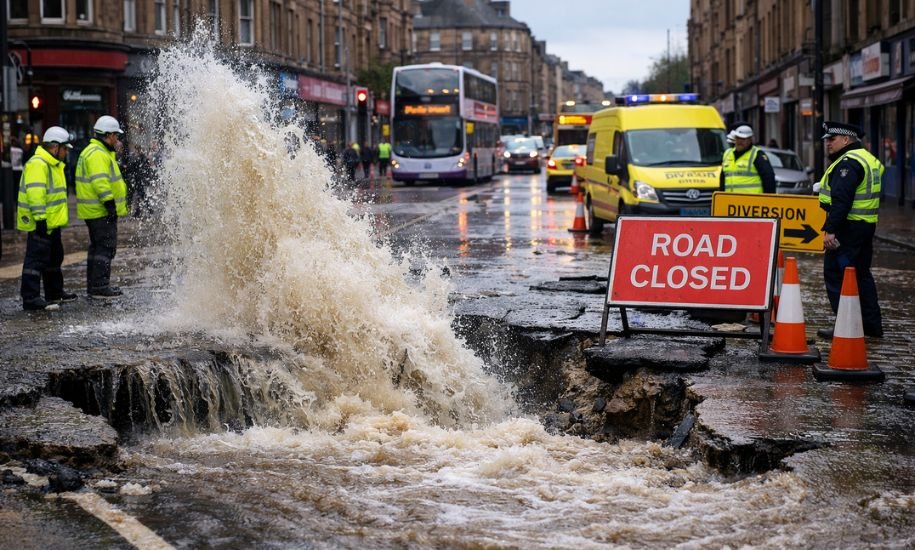
The Glasgow Water Main Break Shettleston Road became a major local concern after a large underground water pipe burst in Glasgow’s East End, flooding streets and disrupting daily life for residents and commuters. Incidents like this highlight the vulnerabilities of aging urban infrastructure and the significant impact that a single pipe failure can have on traffic, businesses, and household water supply.
Water main breaks are not uncommon in older cities across the United Kingdom, but when they occur on busy roads like Shettleston Road, the consequences can spread quickly. In this case, emergency services and water engineers had to respond rapidly to control flooding, repair the damaged pipe, and restore normal water service to the surrounding neighbourhoods.
Quick Facts About the Incident
| Topic | Details |
|---|---|
| Incident Name | Glasgow Water Main Break Shettleston Road |
| Location | Shettleston Road, East End of Glasgow, Scotland |
| Type of Incident | Burst underground water main |
| Main Impact | Flooding, road closures, water supply disruption |
| Responsible Authority | Scottish Water |
| Affected Areas | Homes, shops, and commuters around Shettleston Road |
| Response | Emergency repairs and traffic diversion |
What Is the Glasgow Water Main Break Shettleston Road?
The Glasgow Water Main Break Shettleston Road refers to a situation where a major underground water pipe suddenly ruptured beneath Shettleston Road, allowing large volumes of water to escape onto the street surface. A water main is a primary pipeline responsible for transporting treated drinking water through the city’s distribution network. When such a pipe breaks, it can cause immediate flooding and interrupt water supply to homes and businesses.
In this case, the break resulted in water rushing through cracks in the road and flowing across nearby pavements. Drivers and pedestrians quickly noticed the unusual flooding, and authorities were alerted. Within a short time, engineers arrived to identify the damaged section of pipe and begin repairs.
Because Shettleston Road is an important route connecting multiple communities in Glasgow’s East End, the incident created both traffic delays and public concern. Residents experienced temporary water shortages while repair teams worked to isolate the broken section of the pipeline.
You May Also Read | RAF Typhoon Intercepts Business Jet: A Look at the High-Speed Response
Where Did the Incident Occur?
Shettleston Road is a well-known roadway located in the eastern part of Glasgow. It connects several residential and commercial areas and carries a steady flow of buses, cars, and delivery vehicles every day.
The water main burst occurred along a section of this busy road, causing water to pool on the street and forcing authorities to restrict traffic access. Nearby streets and intersections also experienced congestion as vehicles were diverted away from the affected area.
Because of the road’s importance to local transport routes, the disruption quickly spread beyond the immediate location of the break.
How Water Main Breaks Happen
Water main breaks occur when underground pipes experience structural failure. This can happen for several reasons, particularly in cities where some infrastructure is decades old.
Aging Pipes
One of the most common causes of water main breaks is aging infrastructure. Many pipes beneath UK cities were installed many decades ago and are made from materials such as cast iron. Over time, corrosion and environmental stress weaken these pipes, increasing the risk of rupture.
Pressure Changes
Water systems operate under significant pressure to ensure that water can reach homes and buildings throughout the city. Sudden changes in pressure or heavy demand can sometimes cause stress on weak sections of a pipeline, leading to cracks or breaks.
Ground Movement
Soil shifting, road traffic vibration, and construction activity can also place pressure on underground pipes. Even small ground movements may cause an already weakened pipe to fracture.
Weather Conditions
Cold temperatures and freezing conditions can also contribute to water main bursts. When water freezes, it expands, which can increase pressure inside the pipes and cause them to split.
Immediate Impact on the Local Community
When the Glasgow Water Main Break Shettleston Road occurred, the effects were felt immediately across the surrounding area.
Flooded Streets
The most visible impact was the sudden flooding of parts of Shettleston Road. Water spilled from beneath the road surface and flowed along the street, creating hazardous conditions for both pedestrians and vehicles.
Traffic Disruption
Authorities had to close sections of the road to allow repair teams to safely access the damaged pipeline. Buses and cars were diverted, which caused traffic delays in neighbouring streets.
Temporary Loss of Water Supply
Some residents experienced reduced water pressure or temporary loss of supply while engineers isolated the damaged pipe. This step is necessary to prevent further flooding and allow safe repair work.
Business Disruptions
Local businesses along Shettleston Road also felt the effects of the incident. Road closures and limited access reduced foot traffic, affecting shops, cafés, and service providers operating in the area.
Emergency Response and Repair Efforts
Once the water main break was reported, engineers from the regional water authority responded quickly. Their first task was to control the flow of water and prevent further flooding.
The response process generally includes several key steps:
- Locating the damaged section of pipe
- Shutting off water supply valves to isolate the affected pipeline
- Excavating the road surface to reach the broken pipe
- Replacing or repairing the damaged pipe section
- Restoring water service and testing the system
Excavation work often requires digging into the road surface, which explains why road closures are common during these repairs.
Once the pipe is fixed, engineers gradually restore water pressure to avoid further damage to the system.
Long-Term Infrastructure Challenges
The Shettleston Road incident reflects a wider challenge facing many urban areas across the United Kingdom. Much of the water infrastructure was built during the 20th century and is now reaching the end of its expected lifespan.
Replacing underground water networks is a complex and expensive task. Pipes run beneath roads, buildings, and utilities such as electricity and gas lines, making upgrades difficult.
However, many water authorities are investing in new technologies to improve infrastructure reliability. These include:
- Smart sensors to detect leaks early
- Improved pipe materials with longer lifespans
- Predictive maintenance systems
- Large-scale pipe replacement programmes
Such improvements aim to reduce the number of major water main breaks in the future.
What Residents Should Do During a Water Main Break
When a water main burst occurs in a residential area, authorities often provide guidance to ensure public safety and water quality.
Residents are usually advised to:
- Avoid driving through flooded streets
- Store drinking water if the supply is interrupted
- Run cold taps for several minutes after water service is restored
- Report unusual leaks or low water pressure to the local water authority
These precautions help maintain safe water use until the system is fully restored.
Community Awareness and Infrastructure Responsibility
Events like the Glasgow Water Main Break Shettleston Road highlight the importance of public awareness regarding infrastructure issues. Although such incidents are unexpected, quick reporting from residents and commuters helps authorities respond faster.
Local councils and water authorities also rely on public feedback to identify potential problems before they become major failures.
Urban infrastructure may be hidden underground, but its maintenance plays a vital role in everyday life—from drinking water supply to sanitation and public safety.
Final Thoughts
The Glasgow Water Main Break Shettleston Road serves as an important reminder of how essential infrastructure can suddenly disrupt daily life when problems occur. A single broken pipe caused flooding, traffic delays, and temporary water outages, demonstrating the complex systems that keep cities functioning smoothly.
Although repair teams resolved the issue and restored water supply, incidents like this emphasise the need for continued investment in infrastructure upgrades and preventative maintenance across the United Kingdom.
Understanding these events helps communities remain informed about the systems that support modern urban living. Readers who want more informative updates and explanations of infrastructure events and public issues can continue exploring similar coverage and analysis on our UK blog “The CharFen.”
You May Also Read | EvolutionElectricSolar.com Reviews: The Truth About This Solar Service Provider
